


Pixel neon strips have become increasingly popular in recent years, thanks to their versatility, vibrant colors, and energy - efficient design. As a leading supplier of Pixel Neon Strip, I'm often asked about the power consumption of these innovative lighting solutions. In this blog post, I'll delve into the factors that affect power consumption and provide you with a better understanding of how much energy a pixel neon strip uses.
Understanding the Basics of Pixel Neon Strips
Before we discuss power consumption, let's briefly review what pixel neon strips are. Essentially, these strips are made up of individual LED pixels that can be controlled independently. This allows for a wide range of lighting effects, from static colors to dynamic animations. Each pixel typically consists of a combination of red, green, and blue (RGB) LEDs, and in some cases, a white (W) LED as well, creating RGBW Neon Strips and RGB Neon Strips.
One great advantage of pixel neon strips is that they offer more creative possibilities compared to traditional neon lighting. They are also more durable, flexible, and easier to install. However, to make the most of these features, it's important to understand how much power they consume.
Factors Affecting Power Consumption
The power consumption of a pixel neon strip is influenced by several key factors:
1. LED Type
The type of LEDs used in the pixel neon strip plays a significant role in power consumption. High - quality LEDs are generally more energy - efficient. For instance, some modern LEDs are designed to produce a high level of brightness while using less power. RGBW LEDs, which include a white LED in addition to the red, green, and blue ones, may consume slightly more power than RGB LEDs because there are more light - emitting elements. You can explore our RGBW Neon Strip and RGB Neon Strip options to see the different LED configurations available.
2. Brightness Level
Unsurprisingly, the brighter the pixel neon strip is set, the more power it will consume. Most pixel neon strips come with adjustable brightness settings, allowing users to customize the lighting according to their needs. If you want to save energy, you can lower the brightness level. For example, using the strip at 50% brightness will consume approximately half the power compared to using it at 100% brightness.
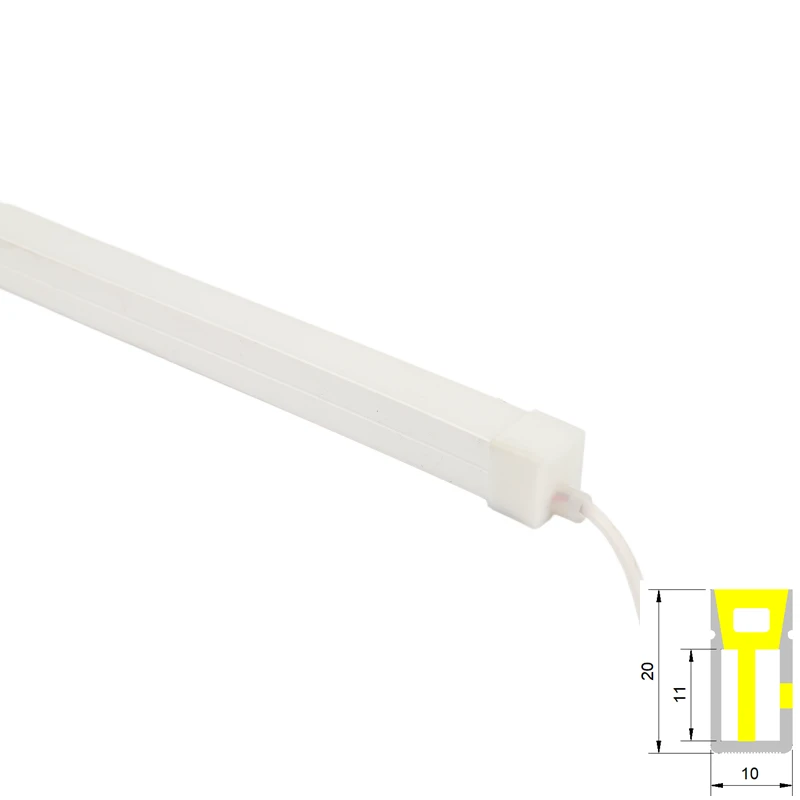

3. Color Selection
Different colors require different amounts of power to produce. Red LEDs generally consume less power than green and blue LEDs. When creating lighting effects, if you use more red - dominant colors, the power consumption will be relatively lower. On the other hand, if you're using a lot of blue or green colors, the strip will use more power.
4. Animation and Effect Complexity
Pixel neon strips are known for their ability to create dynamic animations and effects. However, more complex animations often require more power. For example, a simple static color display will use less power than a fast - moving, multi - colored animation that involves frequent changes in brightness and color.
Calculating Power Consumption
To calculate the power consumption of a pixel neon strip, you need to know two main things: the power rating per pixel and the number of pixels on the strip.
The power rating per pixel is usually given in watts (W). For example, if a single pixel has a power rating of 0.2 watts, and you have a strip with 60 pixels per meter, then the power consumption per meter of the strip would be 0.2 W/pixel × 60 pixels = 12 watts per meter.
Let's say you have a 5 - meter long pixel neon strip with 60 pixels per meter and a power rating of 0.2 watts per pixel. The total number of pixels on the strip is 60 pixels/meter × 5 meters = 300 pixels. The total power consumption of the strip would then be 0.2 W/pixel × 300 pixels = 60 watts.
It's important to note that this is a simplified calculation. In reality, the actual power consumption may vary depending on the factors mentioned above, such as brightness level and color selection.
Comparing with Traditional Lighting
When compared to traditional neon lighting, pixel neon strips are much more energy - efficient. Traditional neon lights use a gas - filled tube that requires a high voltage to operate, which consumes a significant amount of energy. In contrast, pixel neon strips use LEDs, which are known for their low power consumption and long lifespan.
For example, a traditional neon sign might consume 30 - 60 watts per foot, while a pixel neon strip with the same length and similar brightness can consume as little as 10 - 20 watts per foot, depending on the specific model and settings. This energy efficiency not only helps to reduce electricity bills but also makes pixel neon strips a more environmentally friendly choice.
Examples of Power Consumption in Different Scenarios
Let's look at a few examples to illustrate how power consumption can vary based on different usage scenarios:
- Static Red Color at Low Brightness: Suppose you have a 2 - meter long pixel neon strip with 30 pixels per meter and a power rating of 0.15 watts per pixel. You set the strip to display a static red color at 20% brightness. In this case, the power consumption will be significantly reduced. The total number of pixels is 30 pixels/meter × 2 meters = 60 pixels. At full brightness, the power consumption would be 0.15 W/pixel × 60 pixels = 9 watts. But at 20% brightness, it will be approximately 9 watts × 0.2 = 1.8 watts.
- Dynamic Multi - Color Animation at High Brightness: Now, consider the same 2 - meter strip but set it to a fast - moving, multi - color animation at 100% brightness. Since the animation involves frequent changes in color and brightness, the power consumption will be close to the maximum. So, it will be around 9 watts.
Practical Tips for Reducing Power Consumption
If you're concerned about power consumption, here are some practical tips to help you minimize it:
- Adjust Brightness: As mentioned earlier, lowering the brightness level can significantly reduce power usage. You can adjust the brightness according to the ambient lighting conditions in your space.
- Choose Energy - Efficient Colors: Opt for red - dominant colors when possible, as they consume less power.
- Limit Complex Animations: If you're using the strip for decorative purposes, consider using simpler animations or static colors instead of complex, fast - moving effects.
Conclusion and Call to Action
In conclusion, the power consumption of a pixel neon strip depends on various factors such as LED type, brightness level, color selection, and animation complexity. Understanding these factors allows you to make informed decisions about how to use your pixel neon strip to balance energy consumption with the desired lighting effects.
As a supplier of high - quality Pixel Neon Strip, I'm committed to providing you with detailed information and top - notch products. If you're interested in purchasing pixel neon strips for your project, whether it's for commercial signage, home decoration, or a special event, I invite you to contact me for more details. A discussion with us can help you find the most energy - efficient and suitable solution for your needs.
References
- LED Lighting Handbook, Third Edition. This comprehensive handbook provides in - depth knowledge about LED technology, including power consumption and efficiency.
- Industry reports on LED lighting trends and energy efficiency. These reports offer up - to - date information on the latest developments in the LED lighting market, including pixel neon strips.


