With the growing demand for urban landscape lighting and commercial building decoration, LED wall washer has become an important product in the field of outdoor lighting due to its high efficiency, energy saving, rich colors and flexible installation. This article will explore the synthesis method of LED wall washer in depth to help industry practitioners better understand its production process and technical points.
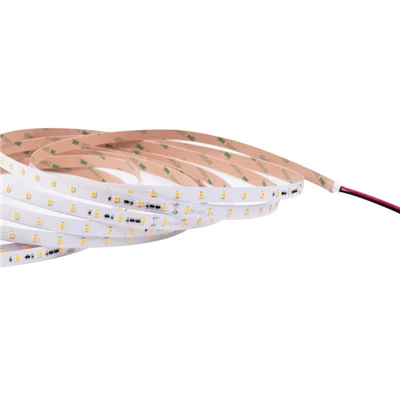
The core of LED wall washer lies in the integration of light source module, heat dissipation structure, optical lens and driving power supply. First of all, the light source module usually uses high-brightness LED chips and is fixed on the aluminum substrate through SMT patch technology. The aluminum substrate not only provides a stable electrical connection, but also effectively conducts heat to ensure that the LED chip maintains a low temperature under long-term operation.
Heat dissipation design is a key link in LED wall washer. The lamp housing is mostly made of aluminum alloy die-casting, with heat dissipation fins or heat conduction channels inside to enhance air convection. Some high-end products will also combine heat pipes or nano-coating technology to further improve heat dissipation efficiency and extend the life of the lamp.
The optical system determines the beam angle and uniformity of the wall washer. Manufacturers usually use PMMA (polymethyl methacrylate) or glass lenses to achieve narrow beam, wide beam or elliptical spot effects through secondary optical design. Some products also support RGB or RGBW color mixing functions, and achieve dynamic lighting effects through DMX512 control systems.
The stability of the driving power supply directly affects the performance of LED wall washers. At present, the mainstream solutions include isolated constant current power supplies and non-isolated constant current power supplies. The former is safer and the latter is more efficient. The power module must have overvoltage protection, overtemperature protection and dimming functions to meet the needs of different application scenarios.
In the assembly process, LED wall washers must undergo strict waterproof tests (usually reaching IP65 or above protection level), aging tests and light decay tests to ensure the reliability of the product in long-term outdoor use.
With the popularization of intelligent lighting technology, LED wall washers are gradually integrating wireless control modules such as Bluetooth, Wi-Fi or ZigBee to provide smarter solutions for smart cities and architectural lighting. In the future, more efficient chips, lighter designs and smarter control methods will become important directions for the development of the industry.