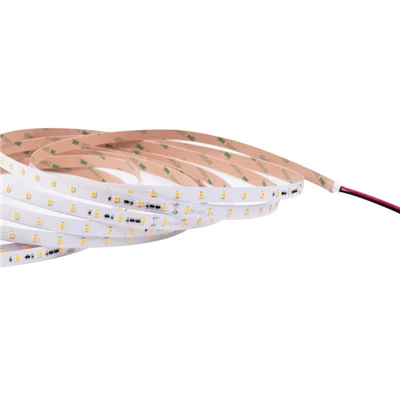
With the continuous advancement of lighting technology, LED neon strips are widely used in commercial advertising, interior decoration and landscape lighting due to their energy-saving, durable and colorful characteristics. Understanding its main materials not only helps to choose the right product, but also helps users to better maintain and use it. This article will introduce the core materials and characteristics of LED neon strips in detail.
1. Substrate material
The substrate of LED neon strips usually uses flexible circuit boards (FPC) or PVC materials. FPC substrates are thin, flexible and high-temperature resistant, suitable for curved and complex installation environments. PVC substrates are lower in cost and suitable for scenes with low flexibility requirements. Both substrates can effectively fix LED lamp beads and ensure stable circuit transmission.
2. LED lamp beads
LED lamp beads are the core light-emitting components of neon strips, mainly packaged with high-brightness chips. Common types of lamp beads include SMD2835, SMD5050, etc. Different models vary in brightness, color temperature and energy consumption. High-quality LED lamp beads have long life, low light decay and stable color performance, which is the key to ensuring the performance of the light strip.
3. Conductive materials
The conductive circuit inside the light strip usually adopts copper foil or silver paste printing technology. Copper foil has excellent conductivity, which can effectively reduce resistance and heat generation, and ensure stable current transmission. Some high-end products will also tin or gold plate the surface of the copper foil to enhance oxidation resistance and conductivity efficiency.
4. Outer protective materials
In order to improve the durability and protection performance of the light strip, the outer layer is usually covered with a layer of transparent or translucent silicone or PVC sleeve. Silicone material has excellent weather resistance, UV resistance and waterproof performance, suitable for outdoor environment; while PVC sleeve has low cost and is suitable for indoor use. Some products will also add diffusers to make the light more uniform and soft.
5. Other auxiliary materials
The joint part of the light strip usually adopts copper core wire and waterproof plug to ensure the safety and stability of the power connection. In addition, some high-end products will also add anti-interference magnetic ring to reduce the impact of electromagnetic radiation on other equipment.
Understanding the main materials of LED neon light strips will help users choose the right product according to their actual needs and better maintain its performance during installation and use. With the continuous upgrading of material technology, LED neon light strips will achieve greater breakthroughs in brightness and energy efficiency in the future.